

When your hair feels rough, tangles easily, or loses its softness after coloring or heat styling, choosing another product can feel confusing. Do you need more conditioner, a hair mask, or a different routine altogether?
A hair mask can be useful when your usual conditioning routine is not getting the job done. Understanding what it does—and how to judge the results—will help you choose one that fits your hair.
Jump to a section
What Is a Hair Mask?
A hair mask is an intensive conditioning treatment designed to improve hair’s softness, smoothness, and manageability. Most hair masks are applied for a specified time and then rinsed out.

You may also see the term deep conditioner. These categories overlap: both describe treatments intended to provide conditioning, and the names alone do not tell you how a product will perform.
Some masks feel thick and buttery; others have a lighter consistency. Some are used after shampooing, while others have different instructions. Always check the product’s directions instead of assuming every mask belongs at the same point in your routine.
A mask is worth considering if your hair still feels rough or difficult to detangle after your regular conditioner. If your existing routine already leaves your hair comfortable and manageable, you may not need an additional treatment.
What Does a Hair Mask Do to Your Hair?
A suitable hair mask can leave hair feeling softer, smoother, and easier to comb. Depending on the formula and your hair’s condition, you may also notice less friction between strands and easier styling.
Lengths and ends feel less rough to the touch.
Knots become easier to work through with less pulling.
Hair is easier to handle and style.
These practical improvements matter more than how rich the product feels in the jar.
How a hair mask helps dry-feeling hair
Dry-feeling hair often feels rough when you run your fingers along the lengths. The ends may catch on one another, making detangling frustrating.
Conditioning ingredients help lubricate the hair surface, allowing strands to move past one another more easily. Some also form a thin coating that improves how hair feels and behaves. Research on conditioning ingredients and human hair supports their role in reducing combing effort and improving manageability.
This is why “moisturizing” hair care involves more than adding water. The way a formula conditions the surface also matters.
To assess a mask, notice whether your ends feel softer and whether you can detangle with less pulling. Those are useful results even if your hair does not look dramatically different.
How a mask can help damaged hair
Bleaching and some coloring processes can change the hair’s protective surface. Strands may become rougher and more prone to tangling. Research examining untreated and chemically treated hair helps explain why conditioning products can be particularly useful after chemical processing.
Some masks also contain hydrolyzed proteins—proteins broken into smaller pieces.
In a laboratory study of hydrolyzed keratin, certain treatments improved mechanical properties and reduced breakage in chemically relaxed hair fibers under the tested conditions. Results depended partly on the size of the protein fragments.
A smoother feel also does not mean all previous damage has been reversed. Conditioning works best alongside habits that reduce further damage, such as gentler handling and less frequent exposure to high heat. The American Academy of Dermatology offers practical advice on preventing everyday hair damage.
If you are searching for a hair mask for growth, keep the goal clear: reducing breakage may help you retain length, but it does not demonstrate faster growth from the scalp. Noticeable thinning or persistent excessive shedding deserves a separate assessment; the AAD explains why identifying the cause of hair loss matters.
What’s the Difference Between a Hair Mask and a Hair Conditioner?
Hair masks and regular conditioners share a conditioning role. The practical differences depend on the individual formula and its directions.
A mask may be richer or intended for occasional use, but its name does not guarantee that it conditions better than your regular conditioner.
| Comparison | Regular rinse-out conditioner | Hair mask |
|---|---|---|
| Typical role | Conditioning during the usual wash routine | An additional or alternative conditioning treatment |
| Texture | Varies; often lighter | Varies; often richer |
| Application time | Follow the label | Follow the label; longer is not automatically better |
| Frequency | Commonly used after shampooing | Depends on the formula, wash schedule, and results |
| Rinsing | Rinse out | Rinse out unless explicitly labeled otherwise |
You do not automatically need to use both during the same wash. Check whether your mask is intended to replace your conditioner or be used alongside it.
For example, if a mask alone leaves your hair easy to detangle and comfortable once dry, adding another conditioning step may offer little practical benefit. If the product specifies a particular sequence, follow that sequence.
The goal is a routine that meets your needs without unnecessary steps.
What Is a Good Hair Mask for Dry or Damaged Hair?
A good hair mask addresses your main concern and leaves your hair manageable without unwanted heaviness. The richest texture, longest ingredient list, or most dramatic “repair” claim does not necessarily make a product the best match.
Start by identifying what you want to improve: rough ends, difficult detangling, stiffness after processing, or hair that feels dry between washes.
Choosing hair masks for dry hair
Look for a combination of conditioning ingredients rather than a single featured oil. Common examples include:
Ingredients such as behentrimonium chloride help improve detangling and reduce static.
Cetyl or cetearyl alcohol contributes to a creamy conditioning formula. These differ from quick-evaporating alcohols such as ethanol.
These can contribute softness and lubrication.
Ingredients such as dimethicone can improve slip and smoothness.
These ingredients play different roles within a finished formula. Published research describes how conditioner components interact with hair; an ingredient list alone cannot predict exactly how a product will feel on you.
Natural ingredients are not automatically better. A useful formula may combine plant oils with silicones and other conditioning agents.
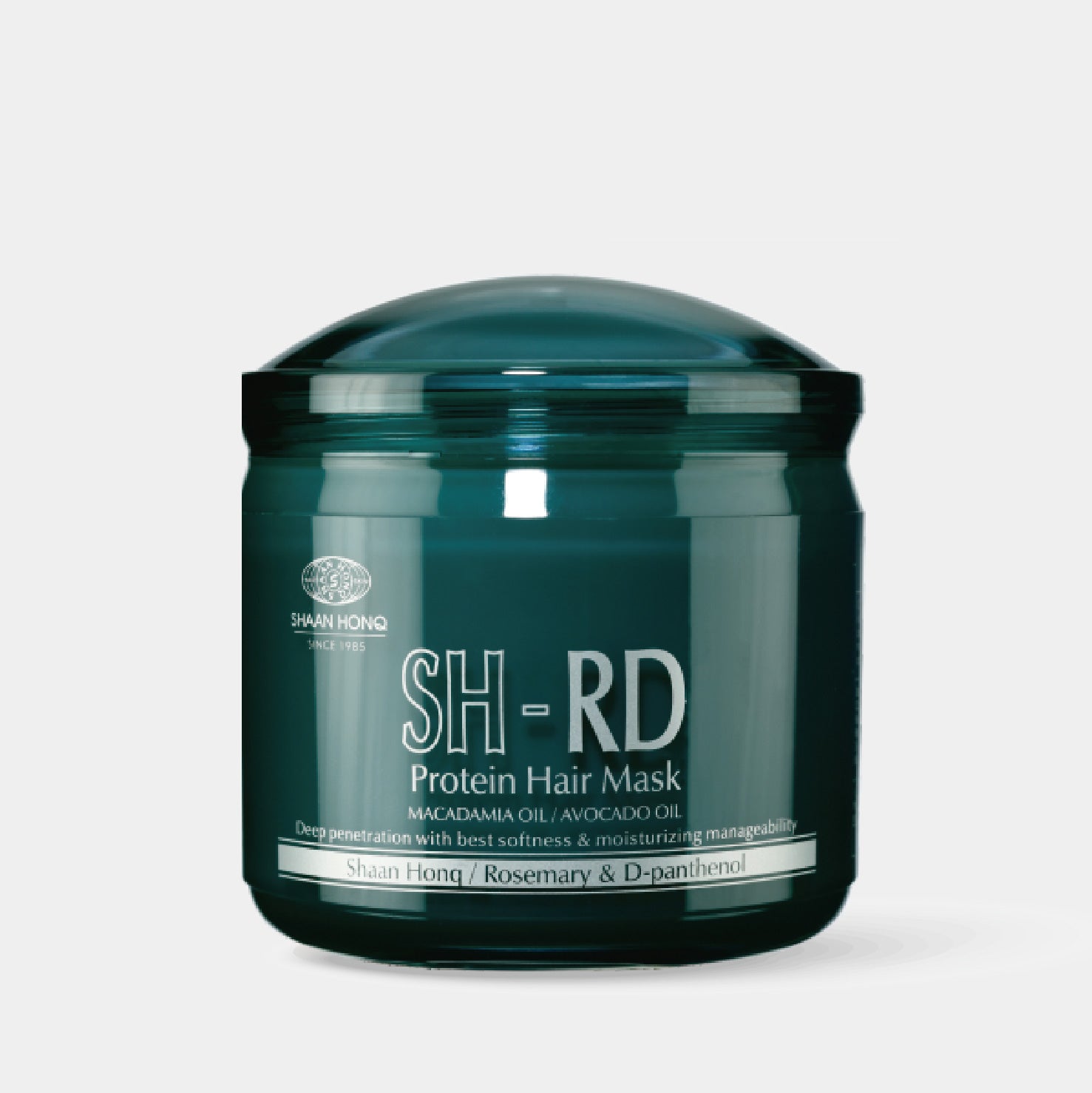
For example, SH-RD Protein Hair Mask lists shea butter, several oils, dimethicone, and hydrolyzed keratin. It illustrates how conditioning ingredients and protein can appear in the same product.

Consider your strand thickness, too. Fine hair may need a smaller amount or a lighter formula, while coarse hair may feel comfortable with richer conditioning. Curly hair can also be fine, so curl pattern alone should not determine your choice.
SH-RD’s dryness and dullness collection provides another starting point for comparing products by concern.
Choosing hair masks for damaged hair
Think about what your hair has been through. Bleaching, chemical straightening, repeated coloring, and frequent hot-tool use provide more useful context than choosing a product solely because your hair looks frizzy.
A formula containing hydrolyzed protein is one option to consider, especially alongside ingredients that improve softness and detangling. However, the presence of protein does not tell you how much is included, how it behaves in the formula, or whether the product will suit your hair.
Assess the whole result. Hair that feels smoother but becomes difficult to style may need a different amount or formula. If a treatment repeatedly leaves your hair feeling unpleasantly stiff or coated, reassess it instead of assuming more applications will help.
When comparing products for damaged hair, prioritize clear directions and realistic benefits. Persistent breakage also calls for a look at styling and chemical-treatment habits; a mask cannot compensate for every source of damage.
How to Use a Hair Mask
Use a hair mask according to its own directions, paying attention to when to apply it, where to distribute it, how long to leave it on, and whether to rinse.
View the mask: opening and scooping demonstration
For a post-shampoo rinse-off mask, the process generally looks like this:
- Check the directions. Confirm whether you have a rinse-off, pre-shampoo, or leave-in treatment. These products are not interchangeable. Check whether the mask replaces your regular conditioner.
- Prepare your hair as directed. If the instructions call for freshly shampooed hair, wash and rinse first. Gently squeeze out excess water or blot with a towel when directed. Avoid rubbing the lengths together.
- Distribute the product evenly. Work through manageable sections, paying attention to the lengths that need conditioning. Use enough to spread evenly; the appropriate amount depends on your hair’s length, density, and the formula. Scalp application depends on the product, so do not assume every mask needs to be massaged into your roots.
- Leave it on for the stated time. Set a timer if helpful. Do not assume that doubling the time will double the benefit, and do not add a steamer, heated cap, or overnight treatment unless the instructions support it.
- Rinse and handle gently. Rinse as directed, then absorb excess water with a towel or T-shirt. Continue with a gentle drying and styling routine.
For SH-RD Protein Hair Mask, the shared core instructions are to shampoo, apply evenly, and rinse afterward. Follow the current package for the exact timing and application details.
Detangling technique should also fit your hair. The AAD recommends working gently from the ends upward. Thick, curly hair may be easier to detangle while conditioned in the shower; straight hair may benefit from drying a little before combing. See its healthy hair-care guidance for more detail.
Do you wash off a hair mask?
Yes—if it is a rinse-off mask, rinse it out after the recommended time. Rinsing with water is different from shampooing again.
For a typical post-shampoo mask, another shampoo is not automatically part of the routine. A pre-shampoo treatment may have different directions.
Likewise, a rinse-off mask should not be treated as a leave-in simply because your ends feel dry. If you want conditioning between washes or before styling, choose a product specifically labeled for that use.
SH-RD’s Protein Cream, for example, is a separate leave-in product. It should not be confused with the rinse-off Protein Hair Mask.
How Often Should You Use a Hair Mask?
Adjust the frequency according to the label, your wash schedule, and how your hair responds.
Where the directions allow it, approximately once a week can be a practical starting point. If you wash less often, try the mask on a suitable scheduled wash instead of adding an extra wash solely to meet a weekly target.
After a few uses, assess softness, detangling, and heaviness:
If lengths feel comfortable and knots are easier to work through, keep the routine.
Try less product, less frequent use, or a lighter formula.
Check application and rinsing, then consider whether the formula and routine suit your needs.
Change one thing at a time. Keeping the rest of your routine reasonably consistent makes it easier to tell whether the mask is helping.
Fine hair, coarse hair, the amount of chemical processing, and how often you wash can all influence the routine. Two people using the same mask may prefer different schedules.
More damage does not automatically mean you should use a mask every day. Look for a repeatable improvement in comfort and manageability, rather than the highest possible treatment frequency.
Why Consider SH-RD Protein Hair Mask for Dry, Color-Treated Hair?
SH-RD Protein Hair Mask is worth considering if your lengths feel rough, dry, and difficult to detangle after coloring or frequent heat styling.
Its listed formula combines shea butter, argan, macadamia, and avocado oils with dimethicone, conditioning agents, and hydrolyzed keratin. That combination makes it a reasonable option to try for softness and manageability. This is an assessment based on the ingredients, rather than proof that the finished product reverses damage.
If richer conditioners usually leave your fine hair flat, begin with a modest amount and assess the result. It also contains fragrance, which matters if you specifically want fragrance-free care.
SH-RD Protein Hair Mask
Review the ingredients and directions to decide whether it fits your next conditioning step.
View ingredients & directions